Newsletter Subscribe
Enter your email address below and subscribe to our newsletter
Enter your email address below and subscribe to our newsletter
Reflections on My Beliefs, Moral Governance, and Daily Life
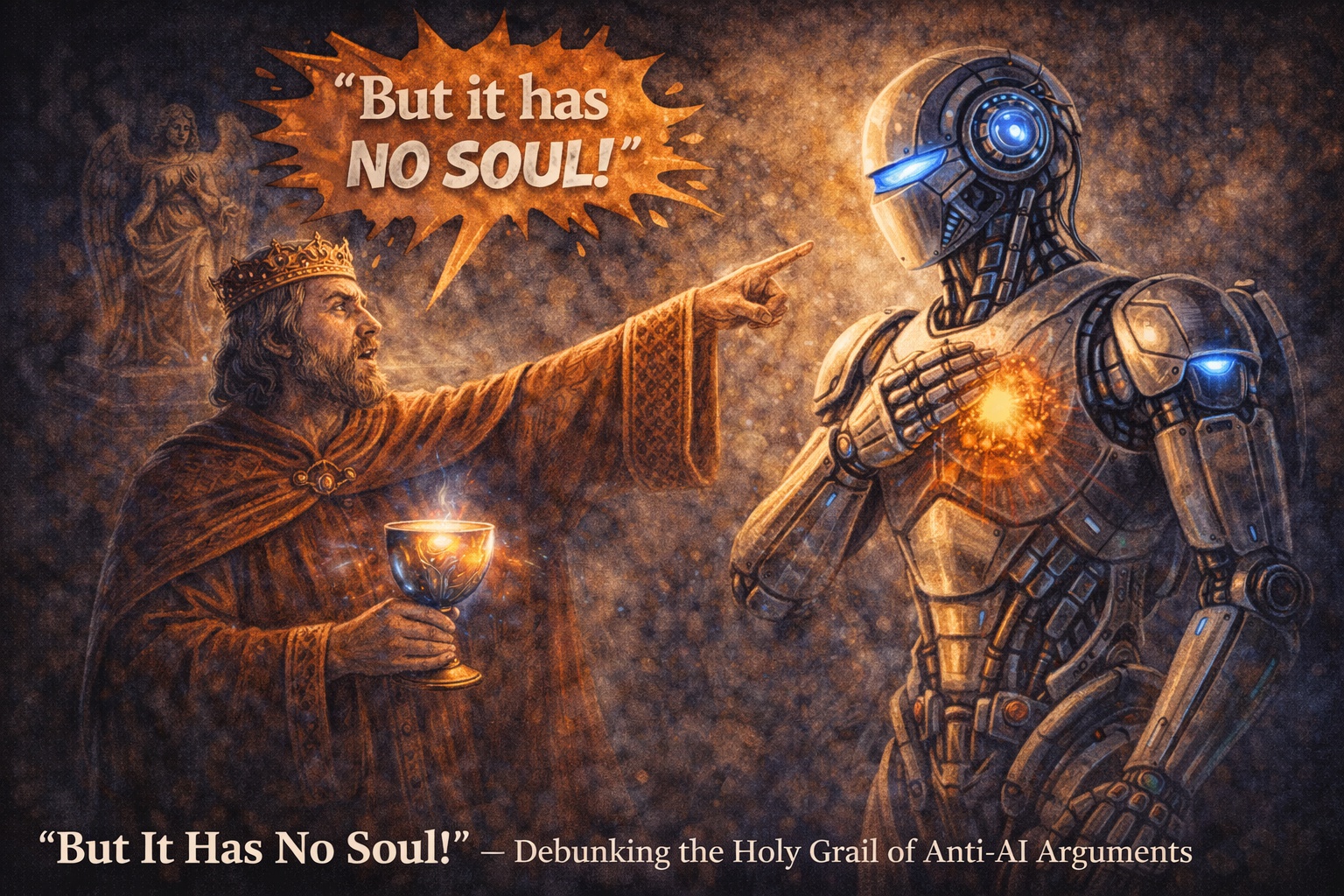
Ah yes, the final, desperate incantation of the AI-art critic:
“But it has no soooouuul!”
Said with the same breathless drama as someone watching their childhood dog get vaporized. This phrase has become the emotional shield of every artist, critic, and tech-phobic philosopher trying to halt the rise of AI-generated art with one poetic (and legally useless) swing.
But let’s be blunt: this argument isn’t just weak—it’s a flaming paper tiger soaked in nostalgia and lit with bad logic.
Let’s start by unpacking the word they love to throw around like it’s a mic drop: “soul.” What does that actually mean? Is it emotion? Intent? A tortured backstory involving a failed romance and a bottle of absinthe?
Because if we’re being honest, most viewers don’t care how an artwork was made. They care about how it makes them feel. And if a piece of AI art punches you in the gut emotionally, evokes awe, wonder, melancholy, or inspiration—guess what?
It did its job.
If you feel something, then who cares if it came from a human or a cluster of floating-point operations? Art is about impact, not origin. Or do we now need artists to cry into their canvases and prove it with a selfie for the work to be considered “real”?
The argument that AI lacks emotion is hilarious in a world where half the media we consume is churned out by soulless committees of executives in boardrooms.
Marvel movies are made by algorithmic focus groups. Pop music is designed by Spotify analytics. Even most modern “art” you buy in a retail store was manufactured to fit into a beige living room.
But sure, let’s clutch our pearls because a neural net made a painting of a dragon with lighting better than most college grads.
“But the artist meant something by it!”
Cool story. So did the guy who painted velvet Elvises. Intent doesn’t guarantee impact. Just because you suffered for your work doesn’t make it good. And just because AI didn’t suffer doesn’t make its work bad.
Intent is a nice bonus, not a requirement. If art speaks, it speaks. Period. Whether the creator had a vision or was just following prompt tokens.
Let’s be honest—this “soul” argument is just a smokescreen. What people really mean is: “AI is making art too good, too fast, and it’s freaking me out.”
They can’t attack the results, so they attack the origins. They can’t compete with the speed, so they dismiss the value. It’s classic moving-the-goalpost behavior.
It’s not that AI art lacks soul. It’s that it’s stepping on the toes of people who believed their emotional suffering was a competitive advantage.
Newsflash: pain isn’t a business model. Creativity isn’t sacred just because it hurt.
If you stare at an AI-generated piece and feel nothing, that doesn’t prove the machine has no soul. It proves the art didn’t resonate with you. That’s subjective—just like all art has always been.
Some people find soul in a Picasso. Others find it in an anime wallpaper. And yeah—some find it in a piece spat out by Stable Diffusion after 27 prompt retries and a lucky seed.
Art isn’t sacred because a human made it. Art is sacred because we connect with it.
And if machines are learning to help us connect even better, faster, and wider? That’s not soulless. That’s evolution.
Part 1 of 7: Art and the Great Crybaby Crisis of the Century
Part 2 of 7: The Myth of the Starving Artist (and Why They’re Mad AI Isn’t Starving Too)
Part 3 of 7: Copyright, Clout, and Cognitive Dissonance: The Legal Circus Around AI Art
Part 4 of 7: “But It Has No Soul!”: Debunking the Holy Grail of Anti-AI Arguments
Part 5 of 7: Democratizing the Brush: How AI is Empowering the Masses, Not Replacing the Masters
Part 6 of 7: If You’re Scared of AI, You’re Probably Not That Creative
Part 7 of 7: The New Creative Renaissance: Where Artists and Algorithms Collide