Newsletter Subscribe
Enter your email address below and subscribe to our newsletter
Enter your email address below and subscribe to our newsletter
Reflections on My Beliefs, Moral Governance, and Daily Life
Beneath the lawsuits, the wailing about “soulless art,” and the dramatic YouTube rants in dimly lit bedrooms, there’s a deep, unspoken fear driving the backlash against AI-generated art:
“If anyone can make art, what makes me special?”
Spoiler alert: it’s not your gatekeeping.
Let’s be honest—what AI art tools like Stable Diffusion, Midjourney, and DALL·E have done isn’t destroy art. They’ve liberated it. They’ve taken the brush out of the ivory tower and handed it to anyone with a GPU and a dream. And if that terrifies you, then maybe you weren’t defending creativity to begin with—you were defending your exclusivity.
Before AI, if you wanted high-quality art, you had two options:
Now? You write a prompt like, “Ancient warrior priest riding a glowing tiger through a neon jungle at night, cinematic lighting,” hit enter, and BOOM—you’re in business.
You didn’t “steal” anything. You used a tool. Just like a digital artist uses brushes they didn’t invent, textures they didn’t handcraft, and software they didn’t write.
The difference? You didn’t need anyone’s permission.
That’s the revolution. That’s the threat.
Let’s not sugar-coat it: a lot of professional artists didn’t hate AI because of some moral concern—they hated it because it democratized what they were monetizing. For the first time, creativity is no longer gated behind skill barriers, insider circles, and absurdly priced commissions.
People who were never taken seriously in creative spaces—because they couldn’t draw a straight line or didn’t speak the secret lingo—are now generating jaw-dropping art and building communities of their own.
And that, to some self-proclaimed gatekeepers, is heresy.
Here’s where the whining collapses under its own weight: AI art tools don’t replace great artists. They amplify them. Artists who embrace AI aren’t becoming obsolete—they’re becoming unstoppable. They’re cranking out more work, testing ideas faster, and experimenting in ways that would take weeks or months using traditional methods.
AI doesn’t eliminate skill. It accelerates vision. You still need good taste. You still need creativity. But you no longer need to suffer through RSI-inducing linework just to see your idea come to life.
And for people who aren’t traditionally trained? It’s a golden age. Writers can visualize their worlds. Small businesses can build their own branding. Indie game devs can populate their universes. Kids can make art that feels real.
This is the art world cracking open—and not everyone likes what’s crawling out.
Art is not a gated community. It’s not a members-only club where you flash a BFA to get in. Creativity belongs to everyone, not just the people who paid for an Adobe license and spent ten years mastering color theory.
AI art is doing what every great leap in technology has done—removing barriers. You no longer have to be “let in.” You can walk in, build something awesome, and watch people react.
And guess what? That’s what art is supposed to be.
If you’re an artist, congratulations: your toolbox just exploded. If you’re not an artist? Congratulations—you just got one.
The people complaining that AI is “lowering the bar” are usually the ones sitting on it. But the truth is, the bar didn’t drop. It moved. And now more people can reach it.
AI didn’t kill art. It killed the velvet rope in front of it.
And about time, too.
Part 1 of 7: Art and the Great Crybaby Crisis of the Century
Part 2 of 7: The Myth of the Starving Artist (and Why They’re Mad AI Isn’t Starving Too)
Part 3 of 7: Copyright, Clout, and Cognitive Dissonance: The Legal Circus Around AI Art
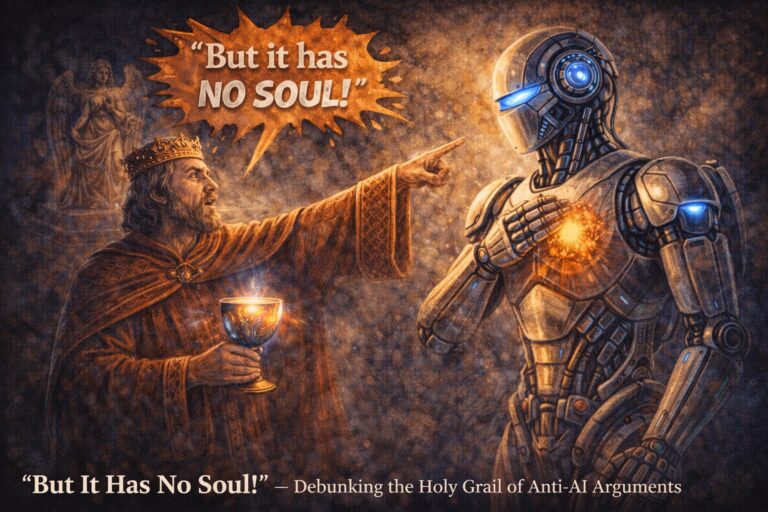
Part 4 of 7: “But It Has No Soul!”: Debunking the Holy Grail of Anti-AI Arguments
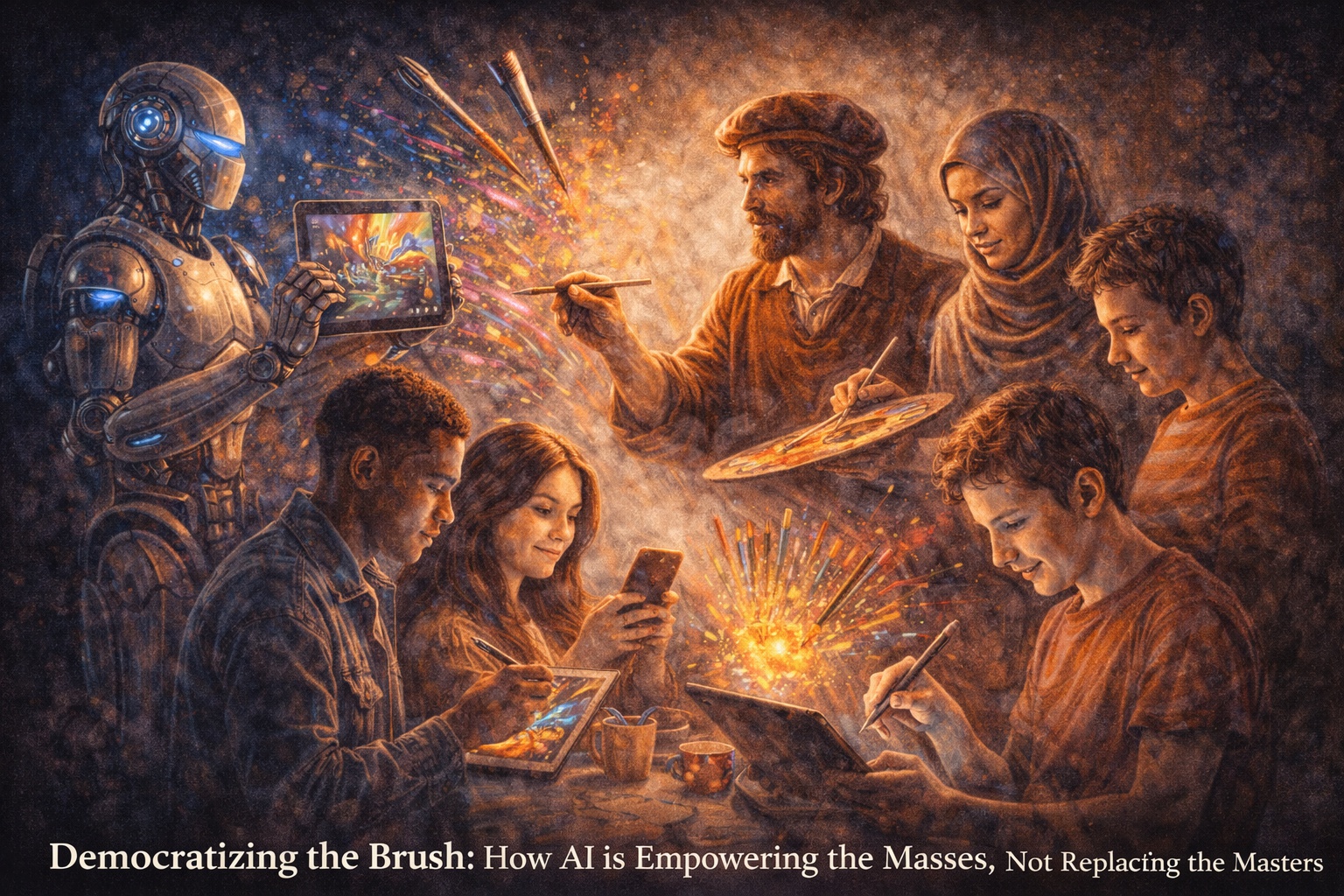
Part 5 of 7: Democratizing the Brush: How AI is Empowering the Masses, Not Replacing the Masters
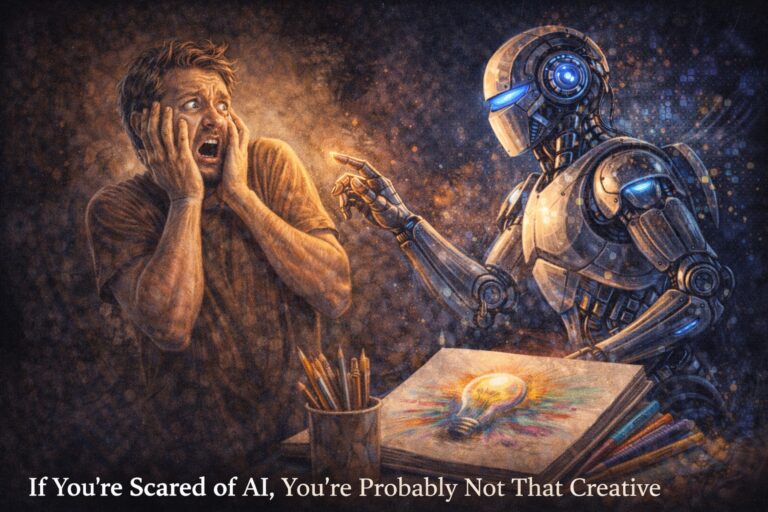
Part 6 of 7: If You’re Scared of AI, You’re Probably Not That Creative
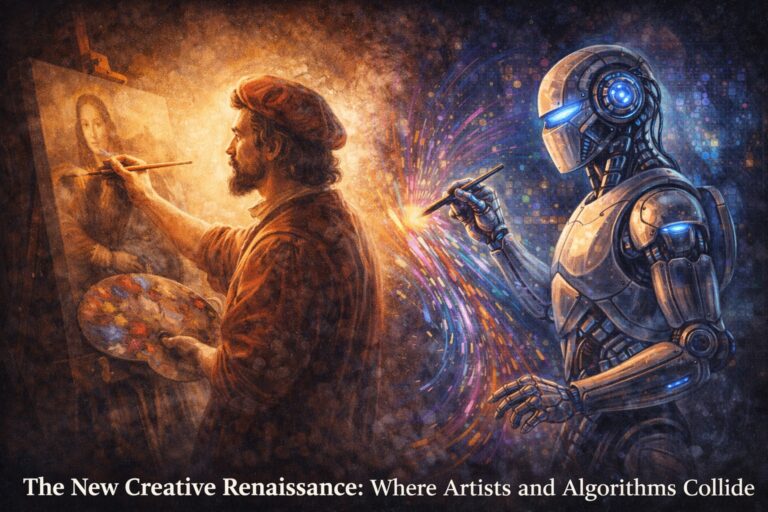
Part 7 of 7: The New Creative Renaissance: Where Artists and Algorithms Collide