Newsletter Subscribe
Enter your email address below and subscribe to our newsletter
Enter your email address below and subscribe to our newsletter
Reflections on My Beliefs, Moral Governance, and Daily Life
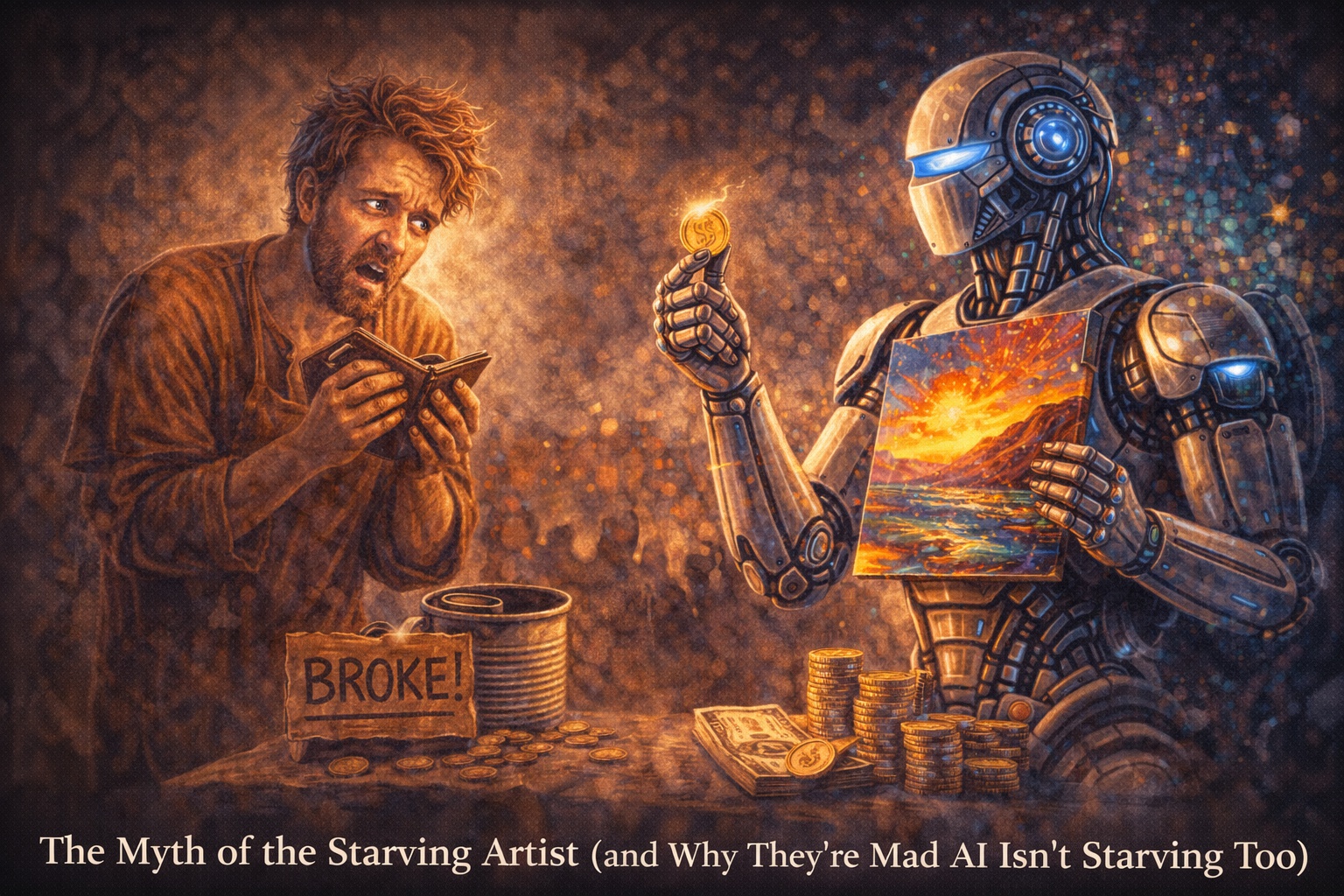
Ah, the starving artist. That tortured soul, fueled by black coffee and existential dread, slaving away in a dimly lit studio apartment for “exposure” and maybe—just maybe—a chance to sell a $200 sketch six months from now.
For centuries, society has romanticized this image like it’s some kind of noble martyrdom. Artists must suffer for their work, you see. They must claw and cry and live paycheck to paycheck to be “authentic.” If you’re not battling poverty, depression, and at least one traumatic backstory, are you even really an artist?
Enter AI. No angst. No rent. No tortured childhood. Just raw computational creativity—delivering in seconds what some humans take weeks to craft.
And that, dear reader, is what’s driving the old guard absolutely bananas.
There’s an unspoken rule in traditional creative circles: If I had to bleed for my art, so do you. It’s gatekeeping disguised as nobility. A warped sense of pride in the struggle that says: “I earned my place. You should, too.”
But here’s the twist: AI didn’t skip the line. It just vaporized it.
Now, instead of kissing up to gatekeepers, hoping someone deems you “worthy,” you can generate a stunning concept image with a prompt and a dream. No art school debt. No gallery rejections. No abusive critique circles where you pretend not to care while dying inside. Just art—unfiltered, democratized, and available to anyone with an imagination and internet access.
The result? Panic.
Make no mistake—this isn’t just about ethics or originality. It’s envy. Pure and simple. Not just envy that AI can create art, but that it can thrive without the agony.
Traditionalists spent decades mastering anatomy, perspective, brush techniques, and emotional manipulation—and now a glorified autocomplete system is getting likes on Instagram and commissions on Fiverr?
That’s not just offensive to them—it’s sacrilege.
They want AI to suffer. To struggle. To be “put in its place.” Because if it doesn’t, it makes their suffering look… unnecessary. And that threatens the entire mythos they’ve built their careers on.
Here’s the reality: the world doesn’t need to romanticize artistic poverty anymore. Creativity isn’t a sacred privilege reserved for those willing to starve for it. With tools like Stable Diffusion, we’re entering an era where anyone can create. Fast. Cheap. Beautifully.
And that scares people whose status depended on the idea that art was hard, expensive, and exclusive.
It’s not about the art anymore. It’s about control—who gets to make it, who gets paid for it, and who decides what’s “legit.”
If you’re an artist, and you’re mad that AI isn’t suffering like you did, I’ve got news: that’s not a righteous crusade—it’s a personal grudge. You’re not defending creativity. You’re defending a scarcity model that no longer applies.
Good news: You don’t need to starve to matter. Better news: AI isn’t your enemy unless you make it one. Worst news: The world is moving forward—with or without your permission.
Adapt, collaborate, evolve. Or stand on the shore yelling at the tide. Your call.
Part 1 of 7: Art and the Great Crybaby Crisis of the Century
Part 2 of 7: The Myth of the Starving Artist (and Why They’re Mad AI Isn’t Starving Too)
Part 3 of 7: Copyright, Clout, and Cognitive Dissonance: The Legal Circus Around AI Art
Part 4 of 7: “But It Has No Soul!”: Debunking the Holy Grail of Anti-AI Arguments
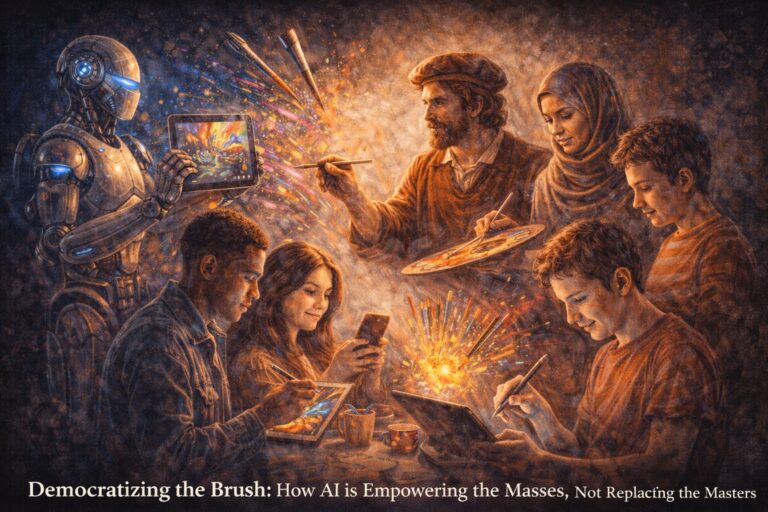
Part 5 of 7: Democratizing the Brush: How AI is Empowering the Masses, Not Replacing the Masters
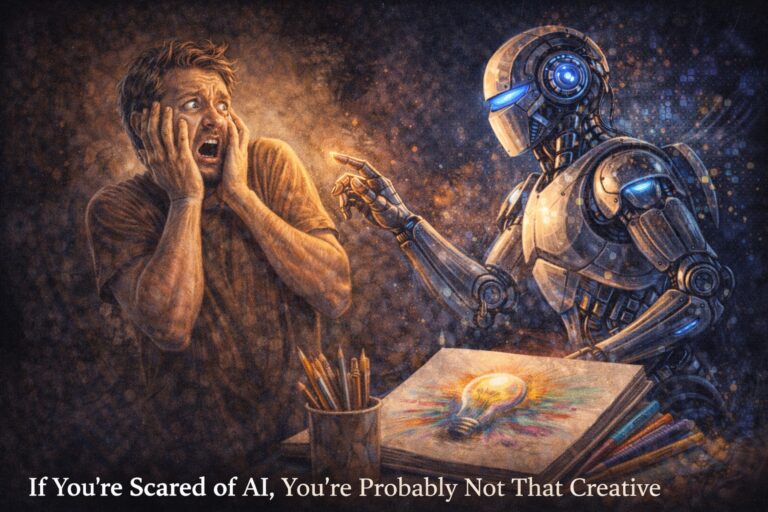
Part 6 of 7: If You’re Scared of AI, You’re Probably Not That Creative
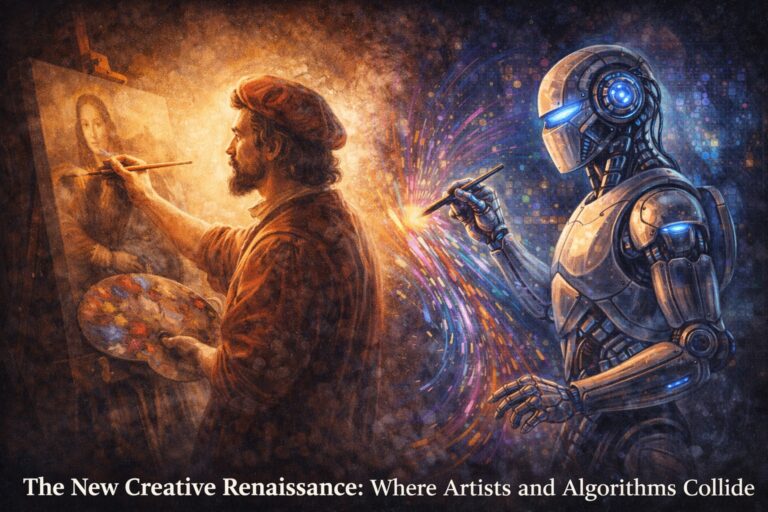
Part 7 of 7: The New Creative Renaissance: Where Artists and Algorithms Collide